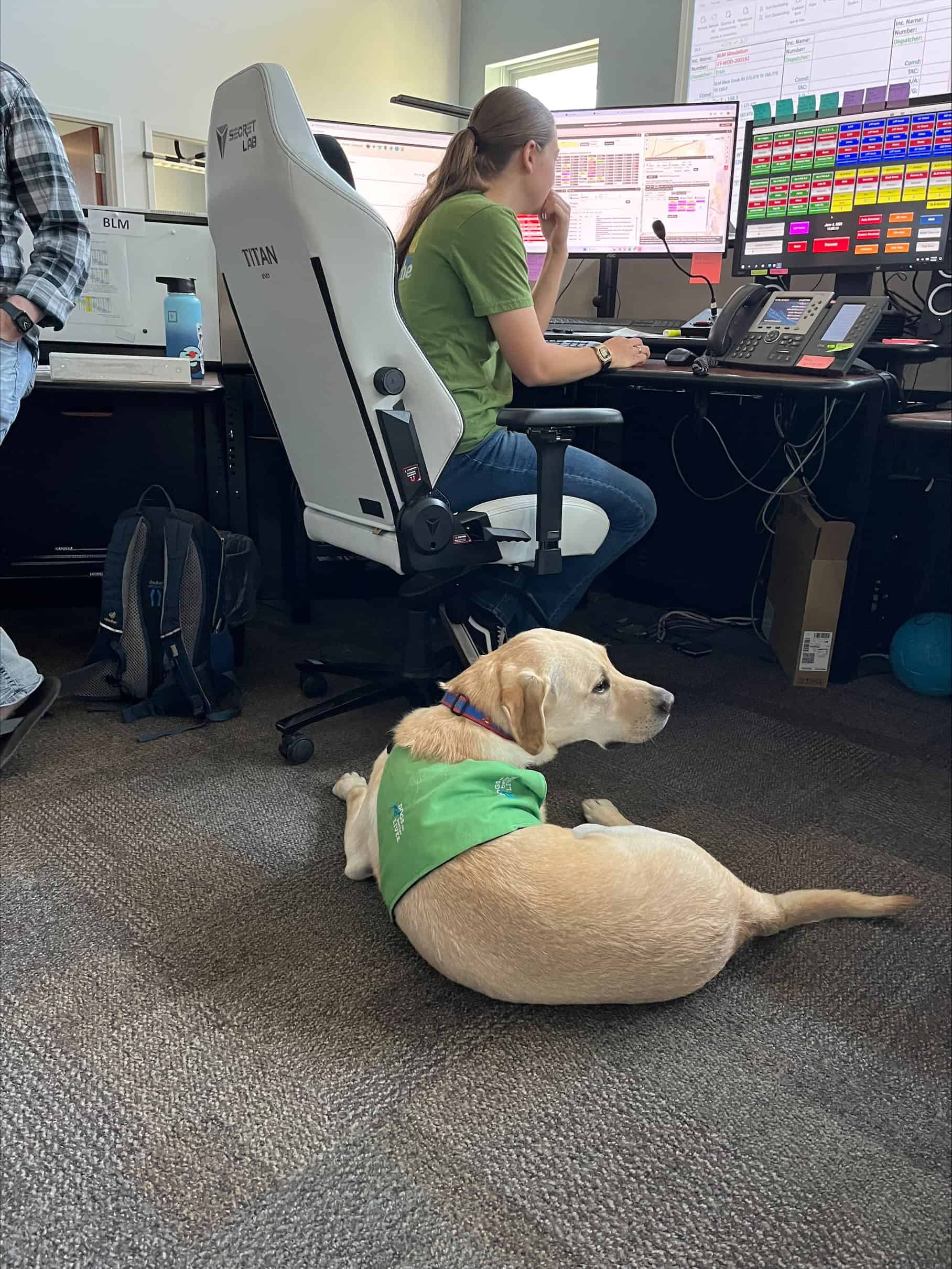
On a summer afternoon in Northern Utah, the dispatch floor hums with urgency. For the dispatchers at the Northern Utah Interagency Fire Center, the pressure feels immediate and constant. In the middle of it all, stretched out calmly on the floor, is Facility Dog Williams who is ready to support his team.
Somehow, he always seems to know who needs him.
Carrie remembers when the room felt different. Years before Williams, she began raising puppies in the dispatch center for another organization. What started as an experiment quickly revealed something powerful. “It was like night and day watching the mental health of my dispatchers improve,” she said. The presence of a dog softened the edges of a high-stress environment, bringing moments of relief into long, demanding days.
But those moments came with a cost. Each puppy eventually had to leave for professional training elsewhere.
“After 4 puppies – I realized that having a task-trained Facility Dog would be even better for us, and I would not have to watch the hearts break when we turned the puppies in,” Carrie explained.
She knew her team needed something more permanent—something steady in a profession that rarely is.
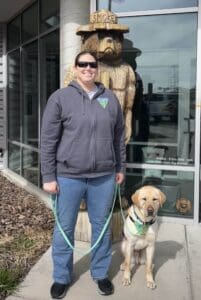
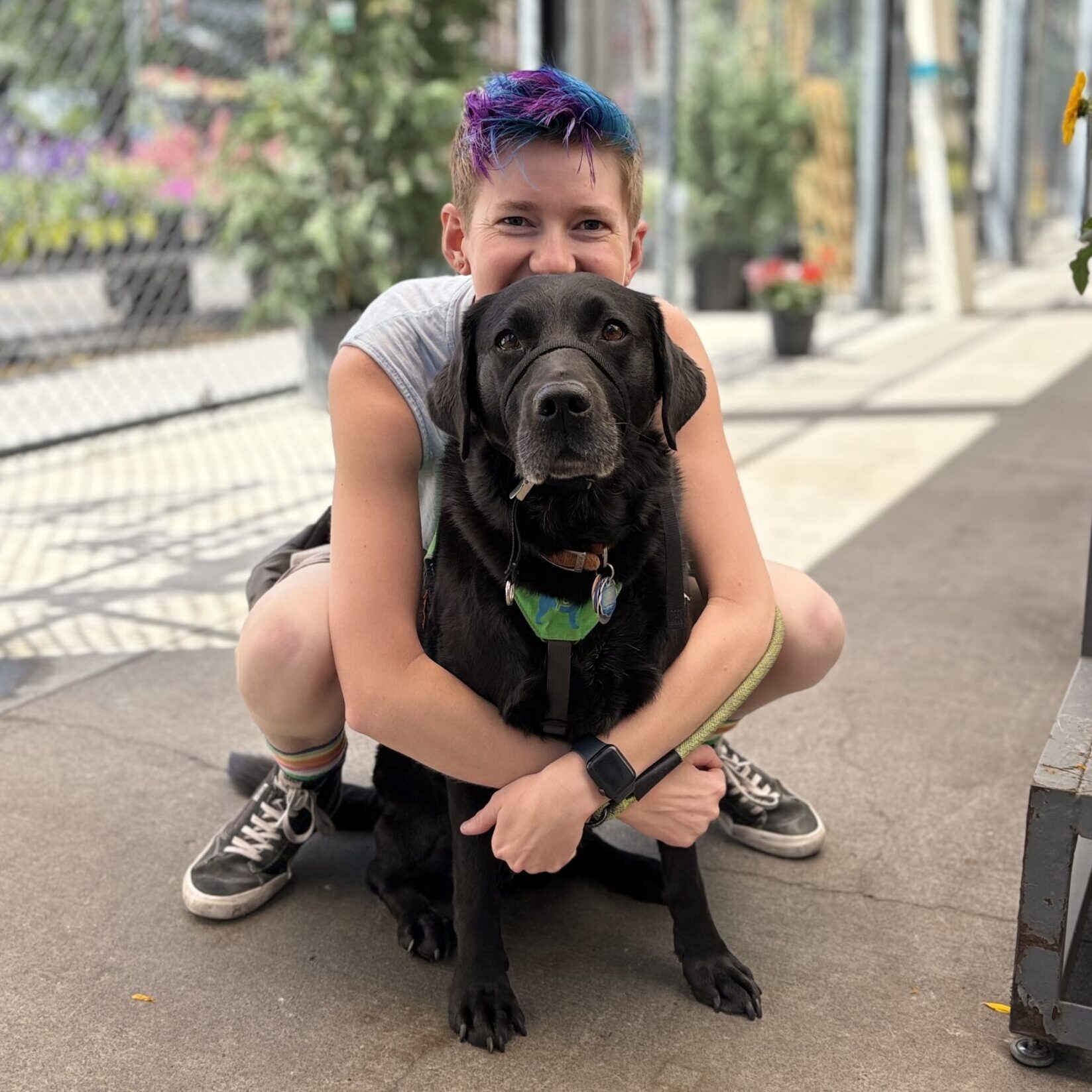
Carrie and Facility Dog Williams at placement
That need was rooted in the realities of wildland fire. Carrie has lived it herself, first as a firefighter and then as a dispatcher. “Wildland fire is fast-paced, high stress, anxiety inducing work,” she said. The long assignments, often 14 to 21 days away from home, push people to their limits. Crews can work up to 16-hour days, with only a few days off before heading back out again. “We can consistently work over 1000 hours of overtime in a 6-month period.”
Over time, that kind of strain takes a toll. Carrie didn’t hesitate to name it. “Firefighters and dispatchers alike are prone to anxiety, depression, high levels of stress, and we have a higher rate of suicide than the general public.”
She knew her team deserved support that met them where they were.
Then Williams arrived.
Carrie still remembers their first meeting. “He was so excited to meet me – his entire body was wiggling with his tail,” she said. He quickly made himself at home, discovering a box of toys and happily scattering them everywhere. “He kept himself busy with the toys until it was time to practice obedience,” she laughed. Even then, his personality was clear—playful, engaged, and ready to connect.
At work, Williams settled into his role just as naturally.
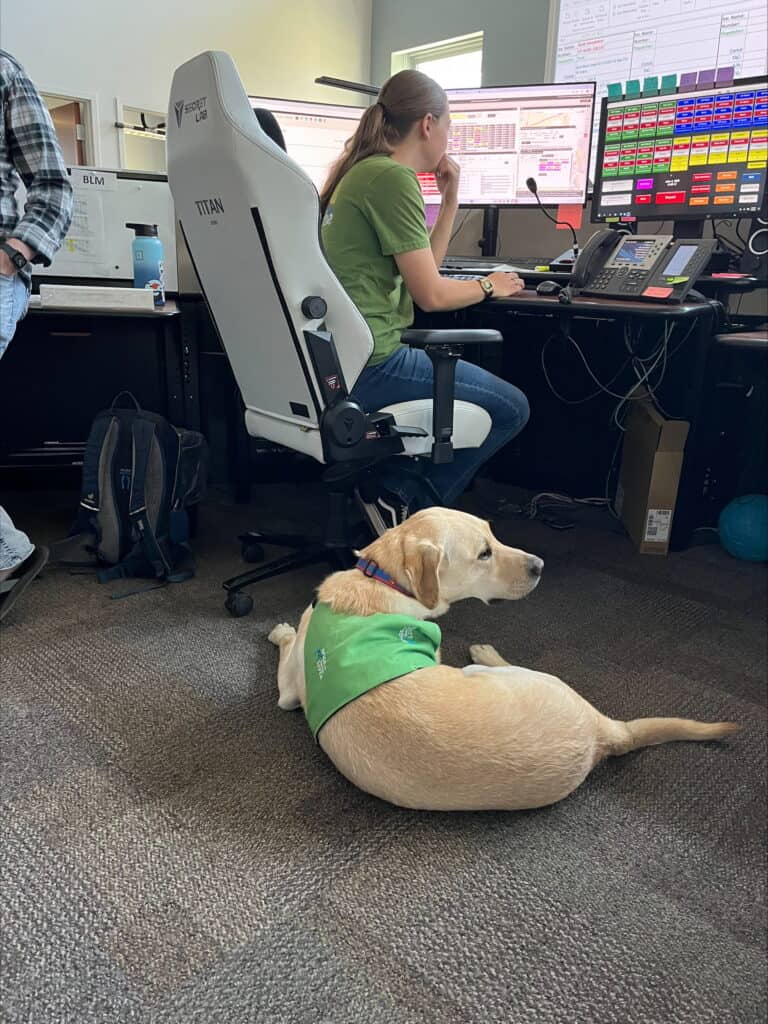
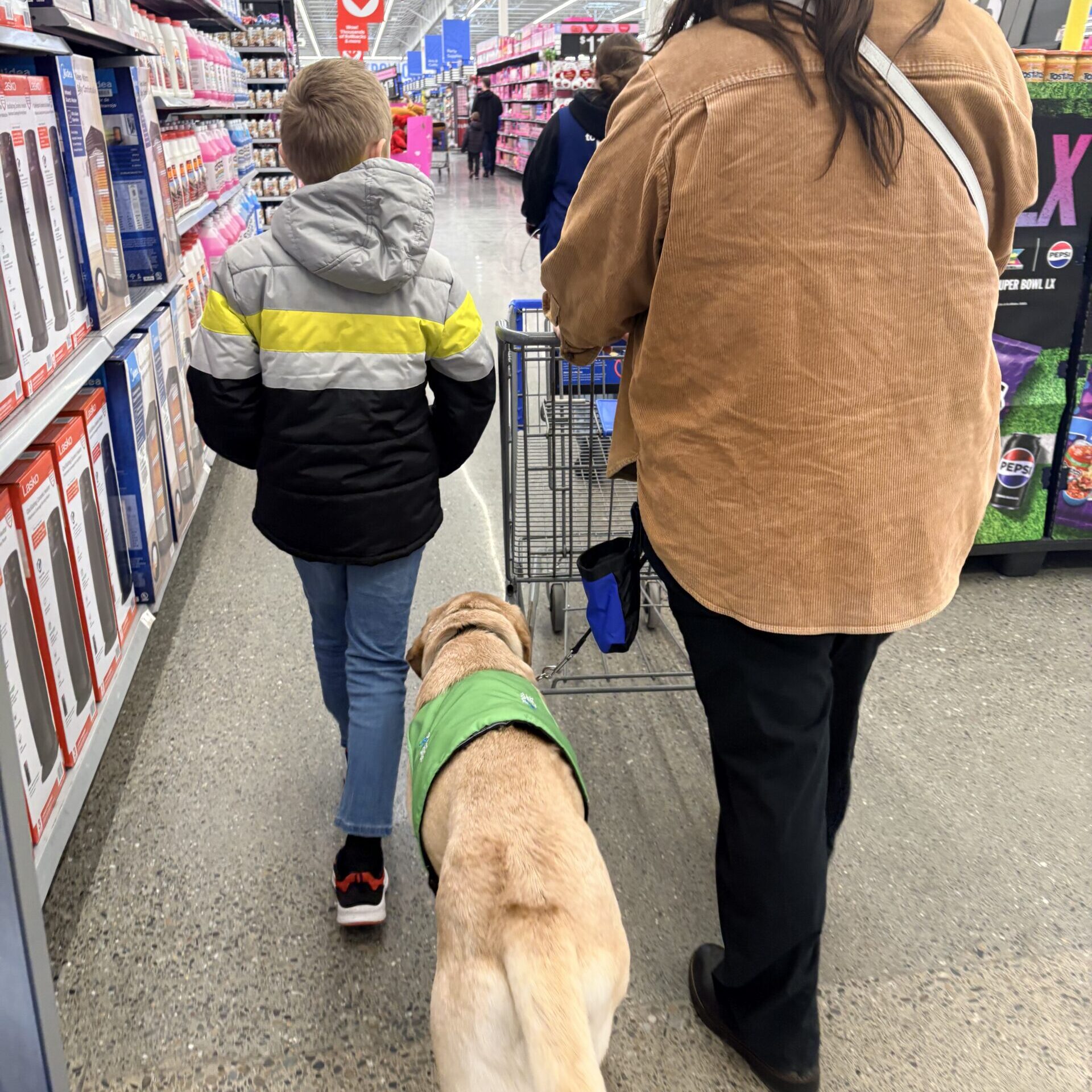
Williams likes to be where the action is, supporting the team
“His favorite part of the day is when he first comes in the door,” Carrie shared. As soon as they step onto the dispatch floor, Williams begins making his rounds, greeting each dispatcher with enthusiasm. It’s a small ritual, but one that sets the tone for the day.
The team knows his skills and how to ask for them.
“All my dispatchers know his tasks—some of them ask for visit, lap, squish, or fetch,” Carrie said. “Fetch is his favorite.”
A ball tossed across the room often brings a quick laugh or a much-needed pause. But it’s what Williams does on his own that stands out most.
“He usually lays down in the middle of the initial attack floor and innately knows who needs him,” Carrie explained.
She has watched him quietly approach dispatchers who are struggling, offering comfort without being asked. “A lot of times they’ll sit on the floor and ask him to settle… he’ll flop over on his side laying on them.”
He also gravitates toward the busiest dispatcher—the one managing the most activity, juggling calls and coordinating responses.
“They’ve told me they like that because it makes them feel like they’re not alone, but not being judged at the same time,” Carrie said.
In an environment where every second matters, Williams provides something rare: a steady, nonjudgmental presence.
His impact becomes even more profound during critical moments. Carrie serves as a peer supporter during Critical Incident Stress Debriefings, where firefighters and dispatchers come together to process difficult experiences. These conversations can be hard to start—but Williams helps break the barrier.
“People tend to gravitate towards me because of Williams—and will share while throwing a ball for him or having him sit in their lap,” Carrie said. “He opens the door and makes it safe to talk.”
That sense of safety extends beyond the dispatch center. Carrie has taken Williams to fire camps, where crews are far from home and working under intense conditions. There, too, he quickly becomes a source of comfort.
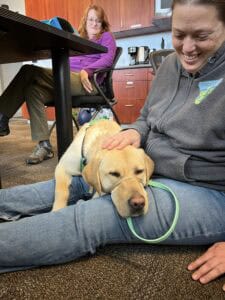
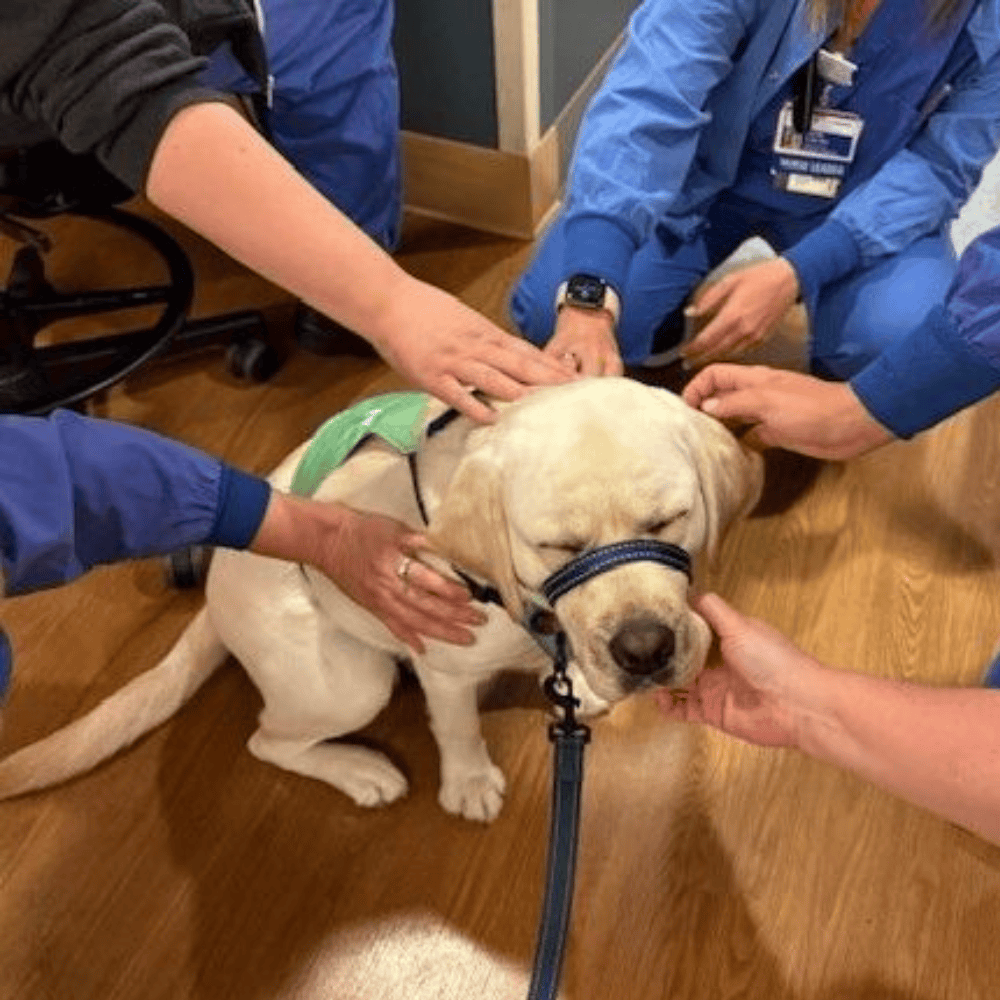
Williams and Carrie demonstrate his task work
“The firefighters at fire camp say he is the best thing about fire camp,” she shared. Many return to Williams again and again, drawn by the simple act of throwing a ball or sitting beside him. Those small interactions often lead to deeper conversations. “I usually can get them talking about their family and sharing proud moments about their kids, spouses, and other animals—which eases the sting of being away for so long.”
Back at home, his support continues in personal ways as well. Carrie, who is hard of hearing, has trained Williams to alert her to her phone. It’s another example of how seamlessly he integrates into both her life and her work, offering support wherever it’s needed.
To Carrie and her team, Williams is exactly what they hoped for.
“He is the perfect dog for us,” she said. “He is super chill, but also likes to play and seems to know when each of those personalities is needed.”
The feedback from those around him echoes that sentiment. Dispatchers describe the difference he makes in simple but powerful ways: “He brings a smile and joy to a busy and intense workplace.” “He made us smile and take a break.” “Just even a quick visit made the day so much better.”
And in the hardest moments, his impact runs even deeper. “Willy supported us in ways nobody else could,” one team member shared. “He brought happiness to a very dark time for our center.”
Williams may not fight fires, but he supports the people who do. He eases stress, creates connection, and offers comfort in a profession that demands so much. Through every visit, every quiet moment, and every wag of his tail, he reminds this team that they are not alone.
Looking ahead, Carrie hopes to expand that impact. She plans to continue bringing Williams to critical incident response events, fire assignments, and training courses, with a long-term goal of growing the program.
“I would like to expand the program on a regional or national scale with the goal of training another handler and having them apply for a facility dog.”
Facility Dog Williams has made it clear: even in the most intense environments, healing can begin with something as simple as a dog who knows when to stay close.
Would your facility benefit from a Facility Dog? Visit dogsforbetterlives.org/facility-dogs to learn more about their work, and apply.