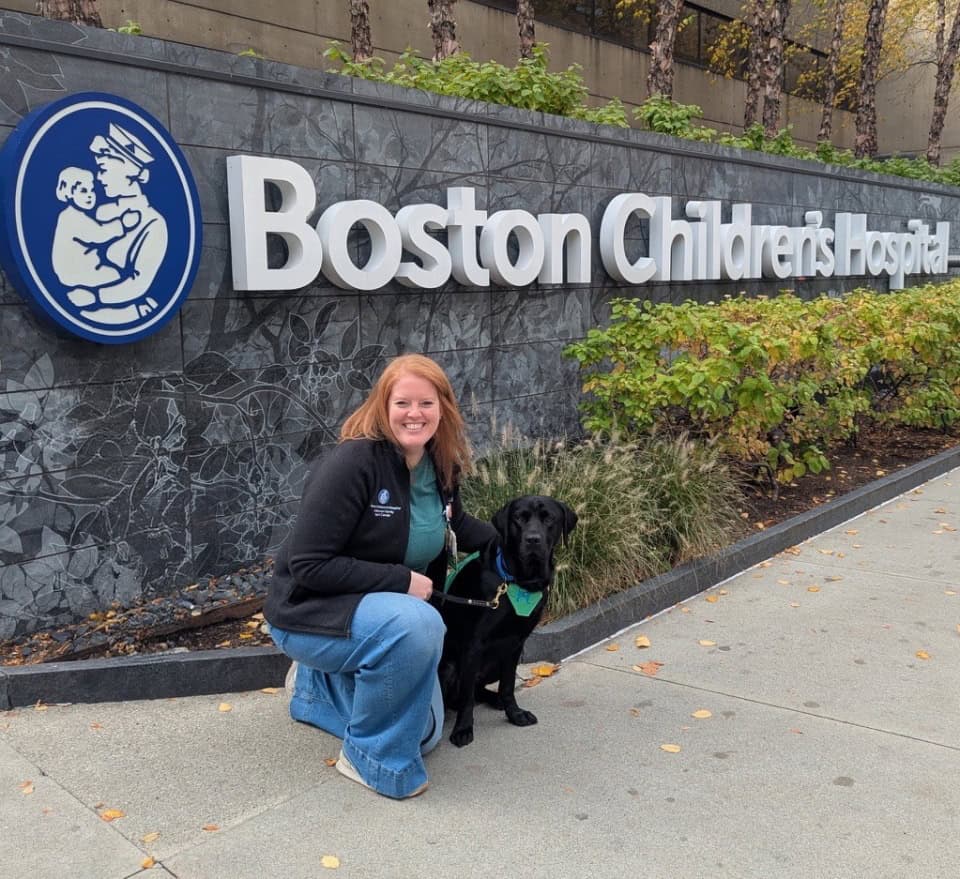
In November 2025, something extraordinary walked through the doors of Boston Children’s Hospital for the very first time.
His name is Teddy.
With a wag that starts at his nose and ripples all the way to the tip of his tail, Teddy became the hospital’s first-ever Facility Dog—trained and placed by Dogs for Better Lives (DBL). For Erin, the hospital’s first Facility Dog handler and a Child Life Specialist, that day marked the beginning of a partnership that is already transforming patient care.
“When Teddy wags his tail in excitement, his entire body wiggles,” Erin says. “His joy is contagious. The people he meets smile—even on their hardest days.”
A Partnership Built on Trust
Boston Children’s Hospital does not make decisions lightly — especially when it comes to patient care.
Its Pawprints animal-assisted intervention program has welcomed volunteer therapy dog teams for more than 20 years. But adding a full-time Facility Dog required deep trust in the organization behind the dog.
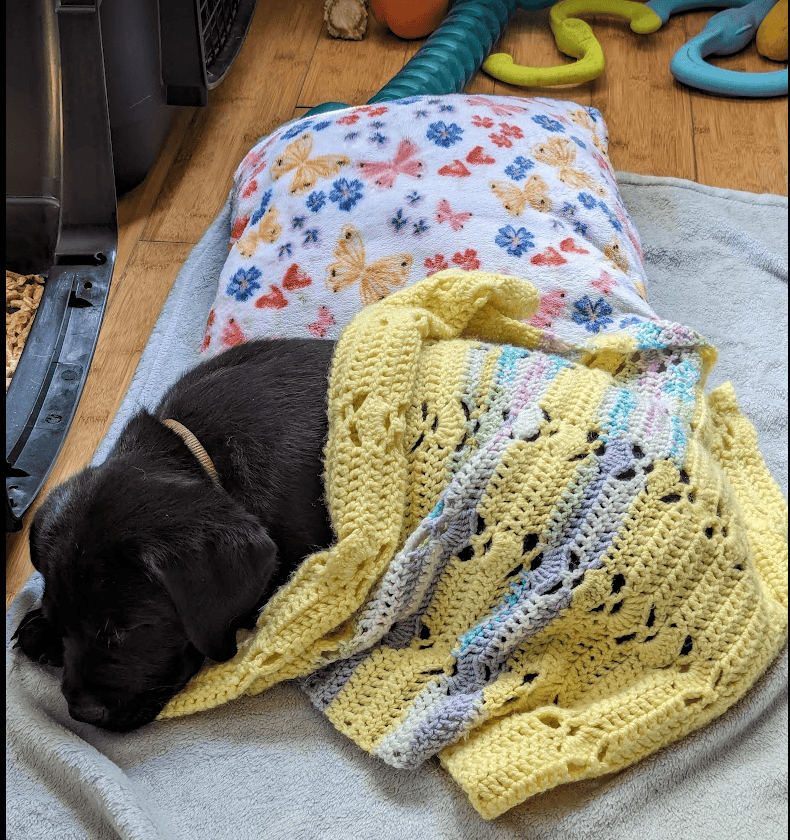
Teddy at 8 weeks old, resting up after a play session in his Puppy Raiser home. His journey began with his volunteer Puppy Raiser’s family where he loved playing with children and learning basic skills, before beginning his specialized training with DBL staff.
“When looking to expand the program, the Pawprints team researched training organizations, visited other hospitals, and asked detailed questions about standards and long-term support,” Erin explains.
After careful consideration, they chose Dogs for Better Lives.
DBL’s accreditation, rigorous health screenings, and clear communication throughout the process gave the team confidence. Being able to visit the Northeast campus and see the training environment firsthand mattered.
“It was clear that the dogs’ wellbeing is a priority throughout the entire process,” Erin says.
When placement day arrived, that confidence was affirmed.
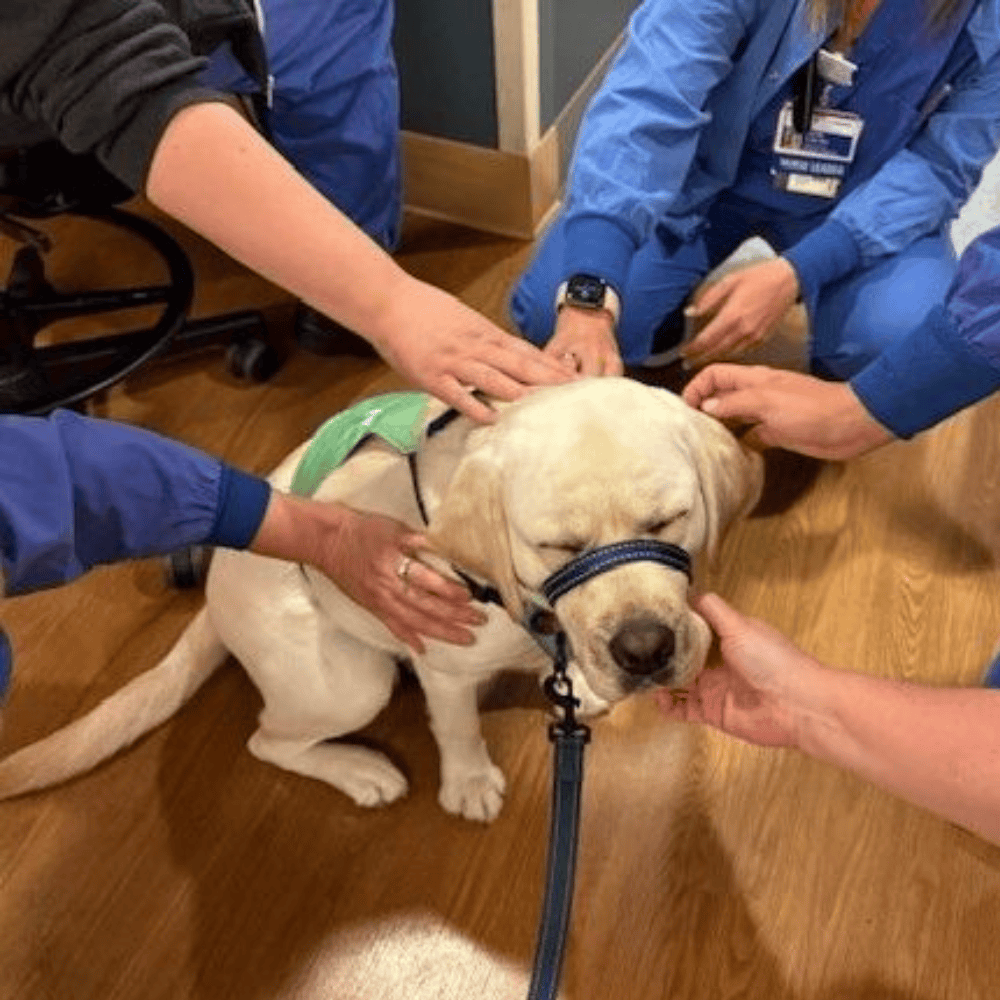
“Teddy arrived happy, well trained, and loving his work,” Erin says. “He gets excited walking into Boston Children’s Hospital and joyfully walks the halls on his way to see patients, families, staff, and visitors.”
She is quick to credit the many people behind him.
“From his puppy raiser to his trainers to the field representative who supported us during placement — everyone plays a role in Teddy being exactly who he needs to be for our hospital.”
Joy and Calm — Sometimes in the Same Hour
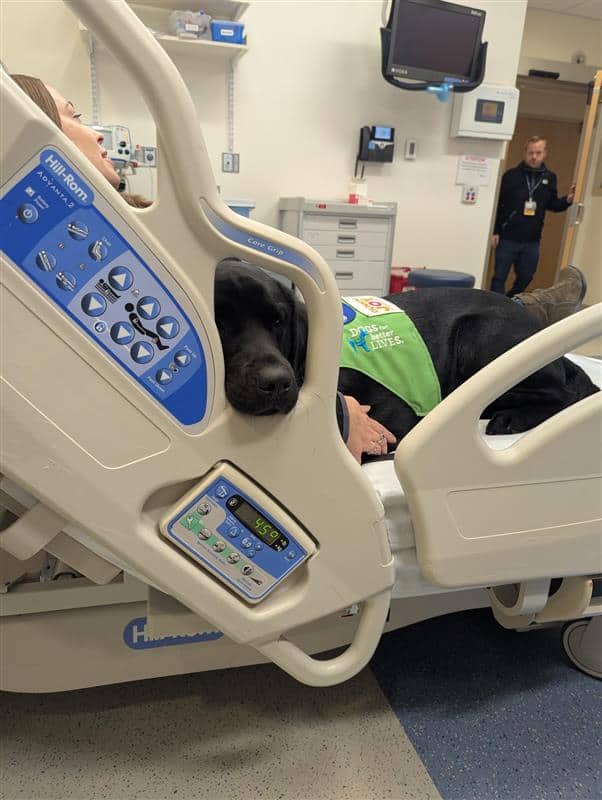
Teddy demonstrates his squish command in a hospital bed during placement
During placement training, Teddy’s adaptability stood out immediately.
“Teddy had an incredible ability to know when to be goofy and when to bring the calm,” Erin says. “In the hospital, we sometimes have to jump between those two ends of the emotional spectrum all day long. Teddy does it with ease.”
He reads body language and adjusts quickly. Sometimes he needs a quiet reminder — “settle” — but often he instinctively matches the energy of the room.
In the Acute Cardiac Care Unit, where some children are hospitalized for months, even small moments matter. Erin recalls visiting a three-year-old patient who was frightened during their first visit.
“We stayed at the doorway and I did some tricks with Teddy. The patient smiled.”
Over time, that smile turned into laughter and requests for favorite commands.
“To some it may sound like a sweet story,” Erin reflects. “To me, I see normalization, opportunities for control, and a chance to laugh and play in a place that can feel very clinical.”
When she tells Teddy “good boy,” the child laughs and signs for more. “Teddy always wags his tail during this play session,” she says.
In a unit defined by monitors and procedures, that laughter is powerful medicine.
“Together We Can Do Hard Things”
As a Child Life Specialist, Erin must quickly assess what each patient needs.
“Things can change quickly in the hospital, and Teddy and I need to adapt to that too,” she says. “We meet patients exactly where they are at — whether it’s the hardest moment of their day or a celebration.”
When serious diagnoses are delivered or new coping skills are being built, Teddy becomes a steady presence.
“Teddy is an incredible listener,” Erin says. “I often tell patients that together we can do hard things. Teddy’s comfort makes the hard things a little bit easier.”
Turning Therapy into Play
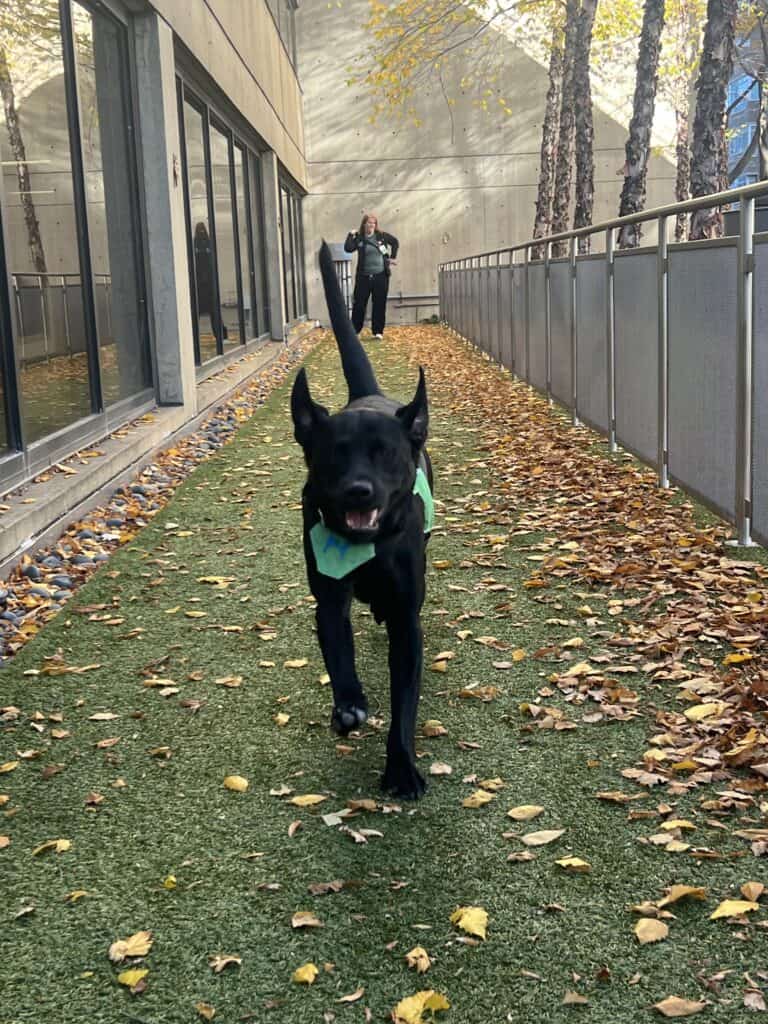
Teddy shows off his playful side
In occupational and physical therapy sessions, Teddy’s training becomes a clinical tool. With more than 30 commands, he can seamlessly join structured therapy activities.
“Without his commands, Teddy would not be able to seamlessly join an OT or PT session,” Erin explains.
He heels to match a patient’s walking pace, plays fetch to support balance work, retrieves items during scavenger hunts, and rests his head gently on a lap when a child needs a break.
“I have heard from many therapists that a patient is more engaged and able to stay engaged for longer when Teddy is there,” Erin says. “We as humans can do our best to motivate a patient, but Teddy does it with his presence and precise training.”
Recently, she witnessed a milestone that left the unit celebrating.
“A patient kicked Teddy’s soccer ball confidently with his prosthetic leg for the first time,” she says. “The patient was smiling and proud, his mom was happily in shock, and the staff were dancing. It was a feel-good Friday moment.”
Comfort in the ICU
Sometimes Teddy’s impact is quiet — but life-changing.
Erin remembers a teen in the ICU, overwhelmed and crying before an IV placement.
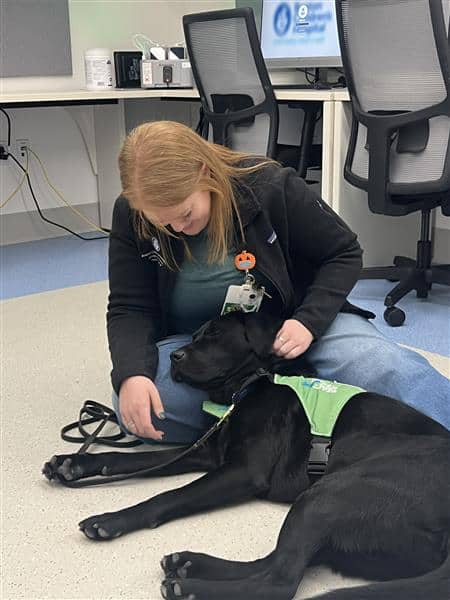 “She had her parents and nurse there supporting her,” Erin says. “But when I told her Teddy was in the room and going to get on her bed, that’s when she was able to calm.”
With a gentle “jump” and “down,” Teddy settled beside her, resting his head near her shoulder.
“She side-hugged Teddy while I guided her through breathing,” Erin says. “By petting his soft ears and hearing his rhythmic breathing, she was able to slow her own.”
She adds, “I couldn’t do that without Teddy. And Teddy couldn’t do that without the meticulous training he received.”
The Silent Partners
After only a few months, Erin sees tremendous potential for growth. “Teddy and I are just at the beginning of our potential,” she says. She hopes one day more Facility Dog teams can serve the hospital’s main campus and satellite locations.
But she always returns to the people who made Teddy possible.
“It is the donors and volunteers that make this team work,” Erin says. “Teddy and I are here supporting patients because of them. They will always be silent partners on a team with Teddy and me.”
Would your facility benefit from a Facility Dog? Visit dogsforbetterlives.org/facility-dogs to learn more about their work, and apply.