
✅ Logged in
HEARING ASSISTANCE DOGS
Thank you for your interest in our Hearing Assistance Dog program! Due to high demand, applications are temporarily closed while we process current applicants and improve our application experience. We expect to reopen applications in Spring 2026 — please check back then for updates.
Key Benefits of Hearing Assistance Dogs
- Safety: Prompt alerts to essential household and public sounds such as smoke alarms, baby cries, or someone calling your name.
- Independence: Assistance in navigating everyday environments with confidence.
- Companionship: A trusted partner dedicated to improving quality of life.
Capabilities and Skills
Hearing Assistance Dogs are trained to alert their handlers by making physical contact and leading them to sounds, such as:
- Home Sounds: Smoke alarms, door knocks, oven timers, baby cries, alarm clocks, or name calls.
- Public Sounds (Certified Dogs): Cell phone ringing, items dropping, or strangers addressing the handler.
Learn more about the differences between Home Hearing Dogs and Certified Hearing Dogs below.
Eligibility Requirements
To qualify for a Hearing Assistance Dog, applicants must meet the following criteria:
- Live in the United States
- Be 18 years or older.
- Must need a Hearing Dog to alert them to a minimum of three sounds in the home and a minimum of one sound in public for Certified Hearing Dog handlers
- Be open to placement of dogs based on needs rather than preference for size, sex, breed, or color.
- Understand that most DBL dogs are Labrador Retrievers, typically weighing 50 pounds or more.
- Applicant will not qualify if a dog is currently living in the home.
Stories of Impact
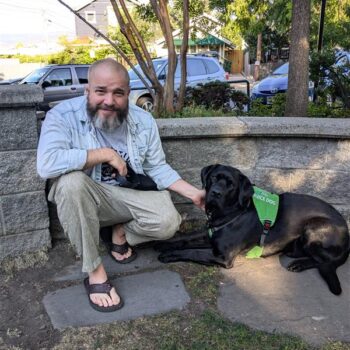
JOHN & CHOWDER
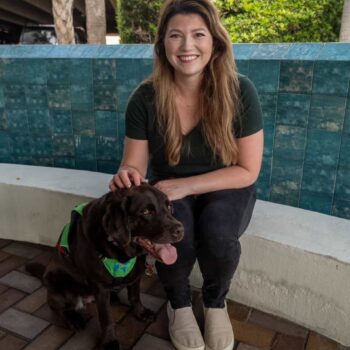
LAUREN & GANACHE
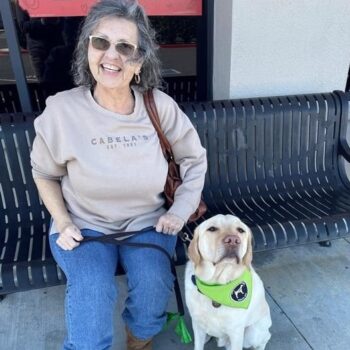
LIZ & BARLEY
Types of Hearing Assistance Dogs
Home Hearing Dogs
Ideal for individuals who only require sound alerts at home or those with limited travel needs.
- You do not need a dog to assist you in public
- You are retired or work from home and do not need a dog to alert you to sounds in the workplace
- You do not need a dog to assist you in class
- You do not travel frequently and therefore do not need a dog to alert you to sounds in a hotel room
- You only travel by car
- You want a dog to accompany you to only pet-friendly establishments like pet stores, pet-friendly restaurants and pet-friendly hotels
Certified Hearing Dogs
Best for individuals who require a dog trained for public access, providing sound alerts in public settings as well as at home.
- You need a dog to alert you to sounds in public places such as grocery stores, mall, school, work, restaurants, and medical appointments
- You need a dog to alert you to sounds such as door knocks, name calls or the smoke alarm in the workplace
- Your schedule includes regular travel by air or public transportation, and you need a dog to alert you to sounds in these environments
- Your travel often includes hotel stays and you need a dog to alert you to sounds, sometimes while you are sleeping
- You are willing to regularly train a Certified Hearing Dog to maintain their obedience and sound work both at home and in public. Certified Hearing Dogs behavior and responsiveness must be maintained over the course of the dog’s working life to ensure the team meets standards set by Assistance Dogs International.
Application Process
Pre-application
Watch our application video, then complete our brief form to express interest in our program.
Pre application phone call
Meet with a Dogs for Better Lives staff member via phone where we can get to know you and outline next steps.
Submit completed application packet
Send us your completed application packet to finalize your written application, which includes medical reference forms and videos.
Personal interview
Meet with members of our team virtually so we can determine your needs.
Selection review
Dogs for Better Lives staff committee meets to review all applications received during the application window. There are a limited number of wait list spots available. Applicants will be selected to our wait list based on their application and demonstrated intent to integrate the dog’s trained skills into their daily lives.
Waiting list
Those selected for our wait list will be notified, and we will be in touch when we have matched you with a dog in our program. The timeline of the waiting period for a working dog varies, but we strive to keep the wait under 2 years.
Matching and placement
Hearing Dogs are accompanied by a trainer to the home of the client. The placement will also take place in public spaces if the dog is a Certified Hearing Dog. The trainer teaches the client how to keep the dog working consistently and how to maintain the dog’s obedience training.
Post placement:
Following the placement, regular communication is required. The client reports regularly on the progress of the dog. When problems or questions arise, our staff are available to assist. In person follow ups, both at home and in public, are a cornerstone of every successful placement.
Dogs for Better Lives provides follow-up support for the life of the team.
Dogs for Better Lives is an equal opportunity organization who does not and shall not unlawfully discriminate based upon race, political orientation, religion, gender, gender expression, sexual orientation, age, national origin, disability, marital status, military status, or for any discriminatory reason or other status prohibited by applicable law.