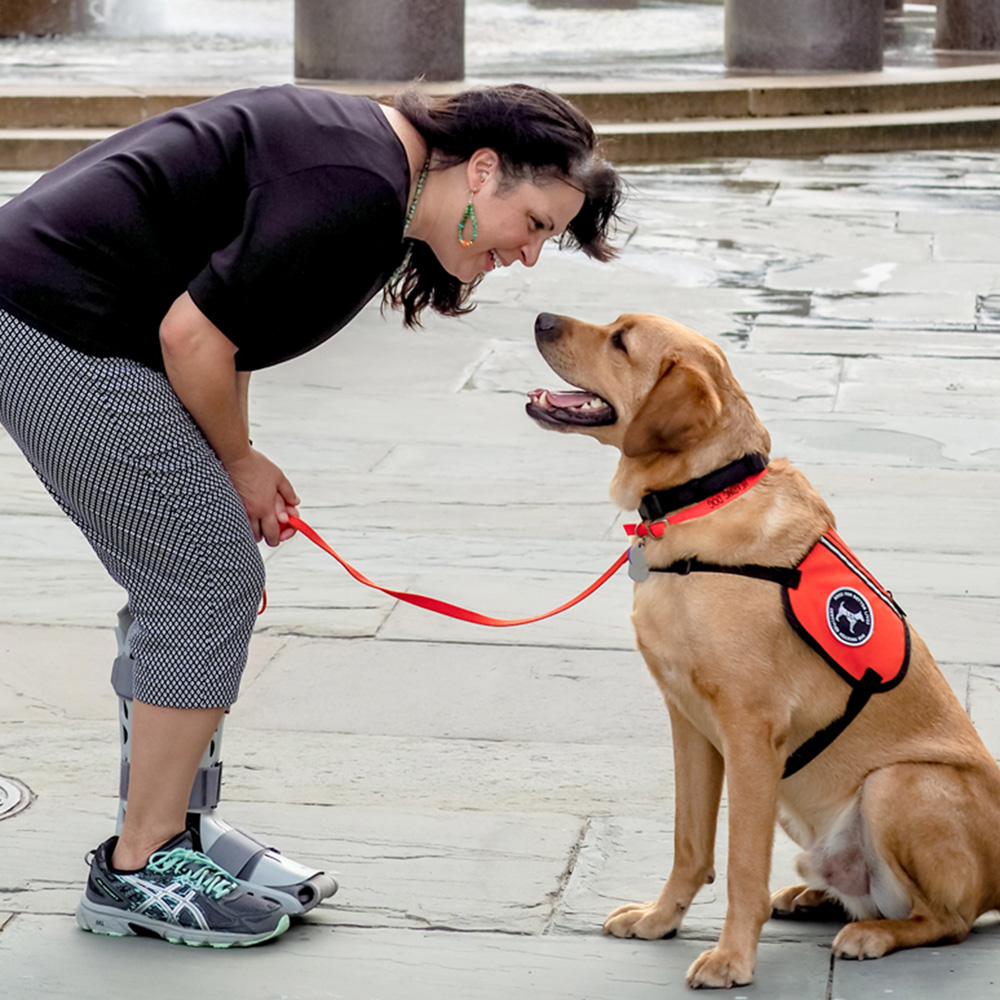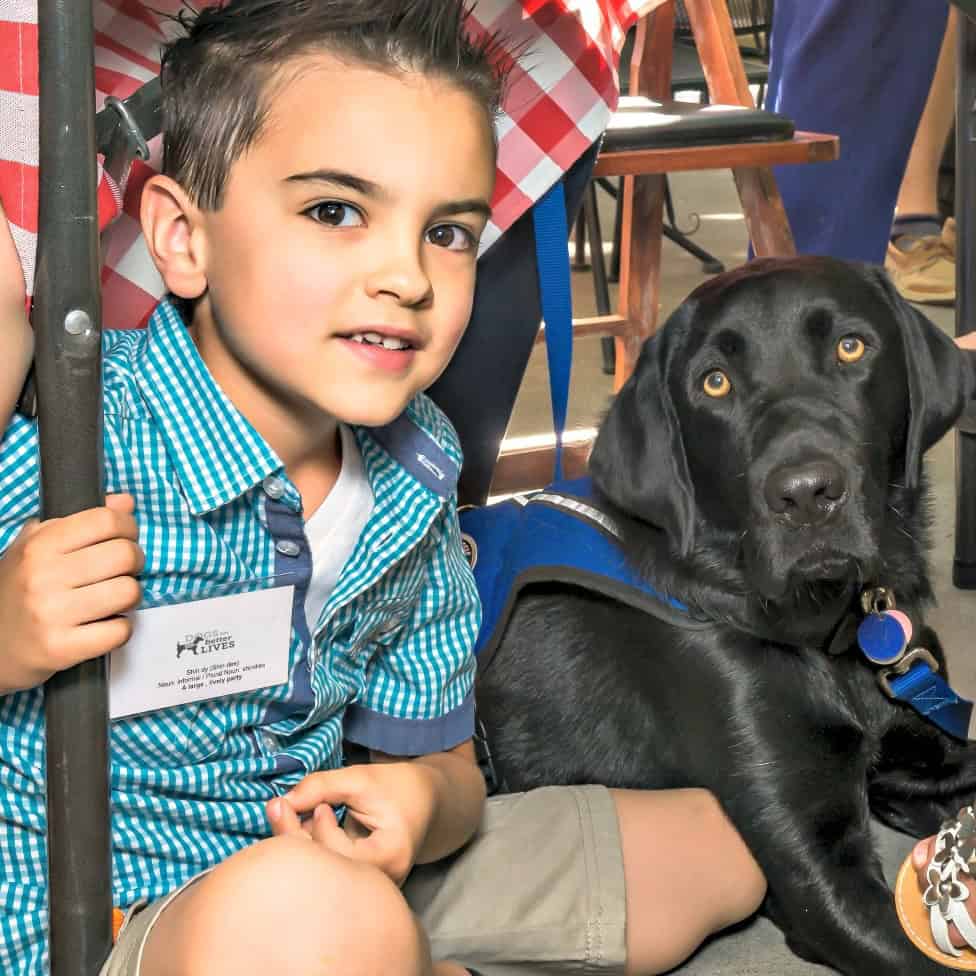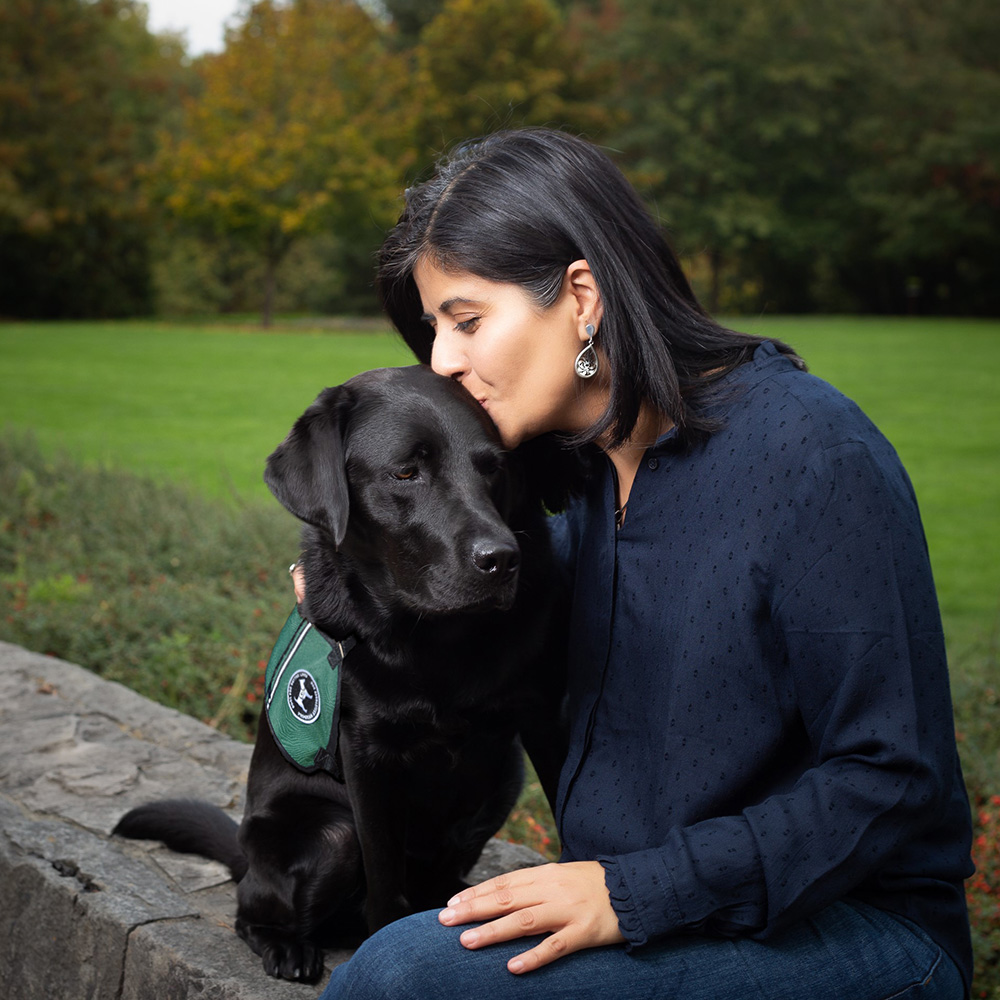

In therapist Susan’s office, one of the most important members of the clinical team doesn’t carry a notebook or ask questions. Her name is O’Hara, a remarkable Facility Dog whose presence at Central Jersey Psychotherapy LLC has become an essential part of the healing process for many clients working through trauma, anxiety, depression, and attachment wounds.
“O’Hara serves as an integral therapeutic partner in my practice,” Susan explains. “Her presence significantly enhances the clinical environment and the client experience.”
For many clients, she is the first step toward feeling safe enough to begin difficult emotional work.
A Life-Changing Gift
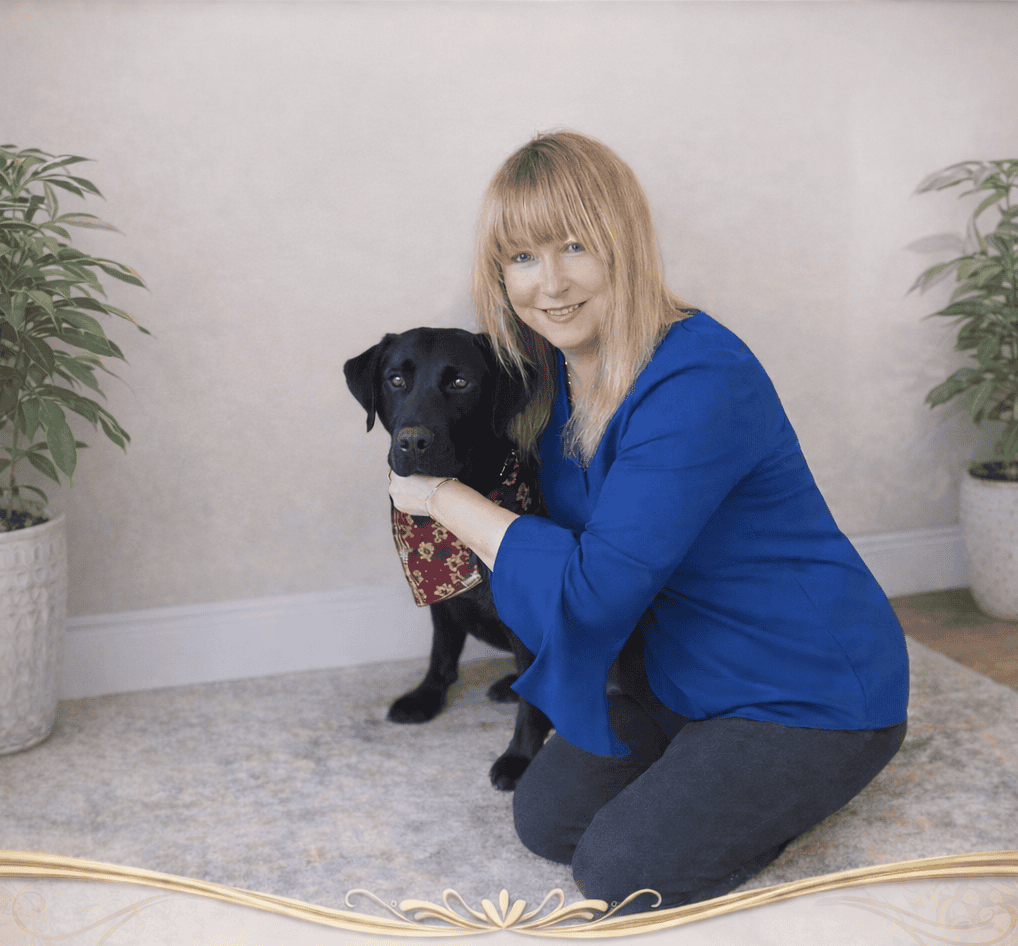
O’Hara and Susan
O’Hara’s journey into the therapy room began with an act of generosity. She was professionally trained and placed with Susan through Dogs for Better Lives at zero cost.
“Their mission is to help people through the human–animal bond, and O’Hara embodies that mission every single day,” Susan shares.
Training to become a Facility Dog takes many months, but by the time O’Hara was placed, she was well equipped with the skills needed to support people in emotional distress. Her personality also makes her a perfect fit. “O’Hara is highly intelligent and naturally social,” Susan says. “Her personality is warm, friendly, and emotionally intelligent, allowing her to connect with clients in a way that feels organic and safe.”
A Natural Gift for Connection
From the moment clients walk into the therapy space, O’Hara’s presence softens the room. She greets people warmly but respectfully, sensing when someone wants interaction and when they need space.
“She engages in a choice-based, voluntary manner,” Susan explains. “She approaches clients for affection only when consent is given and demonstrates an intuitive awareness of boundaries.”
If invited, O’Hara may sit beside a client, lean gently into them, or curl up at their feet. If not, she calmly settles nearby, simply sharing the space.
“Even when she isn’t following a specific command, her calm settling, affectionate engagement, and intuitive responsiveness actively supports the therapeutic process,” Susan says.
When Words Feel Impossible
One of the most powerful examples of O’Hara’s impact came during a session with a teenage client who arrived feeling anxious and depressed.
The 14-year-old had survived significant trauma and was undergoing a psychological evaluation for an immigration hearing. They had previously had a negative experience with another therapist and struggled to trust the process.
During the session, O’Hara gently climbed into the teen’s lap and settled there quietly while they petted her fur.
“The client later shared that they did not think they would have been able to talk about their experiences if O’Hara had not been sitting with them,” Susan recalls.
In that moment, O’Hara created the safety that made conversation possible.
Small Rituals That Bring Calm

O’Hara at work
Another of Susan’s clients, a middle-aged woman living with PTSD, often arrives at therapy feeling overwhelmed and dysregulated.
Over time, she and O’Hara created a greeting routine that now begins every session. “O’Hara enthusiastically performs a ‘visit,’ bringing her toy to the client and wagging her whole body with joy,” Susan says. The client greets her, hugs her, and spends a few minutes connecting with O’Hara before the therapy session truly begins.
“That playful interaction helps shift the client out of a heightened state of stress and into a more grounded emotional space,” Susan explains.
Helping Clients Feel Safe
For many people in therapy, especially those with trauma histories, the hardest part is learning to trust again. O’Hara helps bridge that gap.
“Clients bond with her naturally and often more quickly than they do with people,” Susan says. “That bond can accelerate engagement and progress in therapy.”
One young autistic woman in Susan’s practice struggles with eye contact and social connection. During sessions, O’Hara lies calmly on her side while the client rests beside her, focusing on the rise and fall of the dog’s breathing.
Eventually, the client began practicing eye contact—with O’Hara. “She practices looking into O’Hara’s eyes because it feels safer than direct eye contact with people,” Susan explains. “It allows connection to develop at her own pace.”
Some clients experience overwhelming emotional waves while processing painful memories. In those moments, O’Hara provides grounding through deep pressure exercises.
A client might lie comfortably on a blanket while O’Hara gently stretches across their back, offering steady pressure similar to a weighted blanket. “This can calm the nervous system and help clients remain present with difficult emotions,” Susan explains.
A Bond Clients Feel Deeply
It doesn’t take long for clients to form a deep bond with O’Hara.
“Clients frequently comment on how grounding she is and how much comfort her presence provides,” Susan says.
In fact, when O’Hara isn’t in the office, people often ask about her. “They tell me how much they miss her,” Susan says. “Their concern when she’s absent is a testament to how much she means to them.”
Her presence fosters something essential in therapy: trust.
“Her affectionate presence fosters trust, safety, and emotional openness,” Susan explains. “It contributes directly to therapeutic outcomes.”
 Healing That Comes Full Circle
O’Hara’s story is also one of personal healing.
She came into Susan’s life shortly after the loss of a beloved Australian Shepherd named Nala. Grieving that loss was incredibly painful. “O’Hara arrived during a time when I needed healing myself,” Susan says. “Her warmth, playfulness, and gentle nature helped mend my heart.”
Today, the same comfort she once gave Susan is something she offers to every client who walks through the door.
“In many ways, she reminded me how powerful the connection between humans and animals can be,” Susan reflects.
A Quiet Partner in Healing
Through the work of Dogs for Better Lives, O’Hara found her way into a therapy office where she now touches countless lives.
“She is not just a Facility Dog,” Susan says. “She is a quiet partner in the healing work that happens here every day.”
And sometimes, the most powerful therapy doesn’t come from words at all. Sometimes, it comes from a dog who simply sits beside you and reminds you that you’re not alone.
Would your facility benefit from a Facility Dog? Visit dogsforbetterlives.org/facility-dogs to learn more about their work, and apply.